
Category: Crop Nutrition
-

Article
Issue



Research report
Recipe
News

Event
Page
Production Resource
Dry Bean Nitrogen Fertilization and Inoculant Research in Manitoba
Dry beans are relatively poor N-fixers, producing less than 45% of their N requirement. Nitrogen uptake rates in dry beans range from 3.9-4.7 lbs N/cwt of seed, meaning a 2000 lbs/ac dry bean crop would require 78-90 lbs N/ac. This nitrogen may come from a combination of residual soil N, biological N fixation and N…
-
Article
Issue
Research report
Recipe
News
Event
Page
Production Resource
Faba Bean Crop Nutrition
Faba beans should be inoculated with Rhizobium leguminosarum (biovar viceae) bacteria to promote biological nitrogen fixation. This inoculant species is the same for peas and lentils but check with the manufacturer about different strains of R. leguminosarum. This article provides more information about research on rhizobia for faba bean inoculants. Faba beans can fix approximately…
-
Article
Issue
Research report
Recipe
News
Event
Page
Production Resource
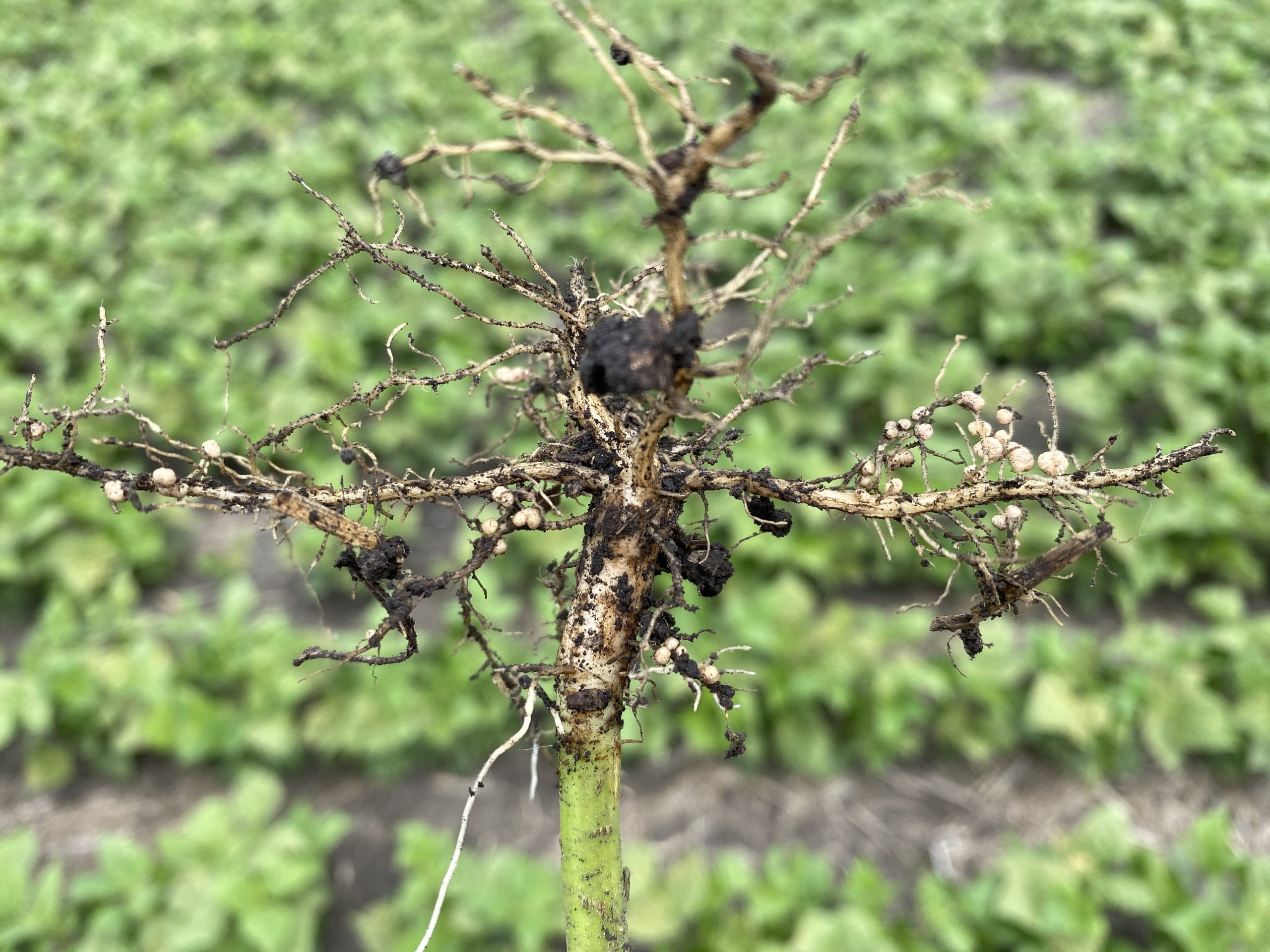
Assessing Field Pea Nodulation
Timing Field pea root nodules can form as early as 14 days after emergence. However, proper nodulation assessment should take place from the 6th to 9th node stages or at R1 (flower bud) to capture peak nodulation. Method Peas have indeterminate nodules that have a cylindrical shape that tends to branch out as they develop.…
-
Article
Issue
Research report
Recipe
News
Event
Page
Production Resource
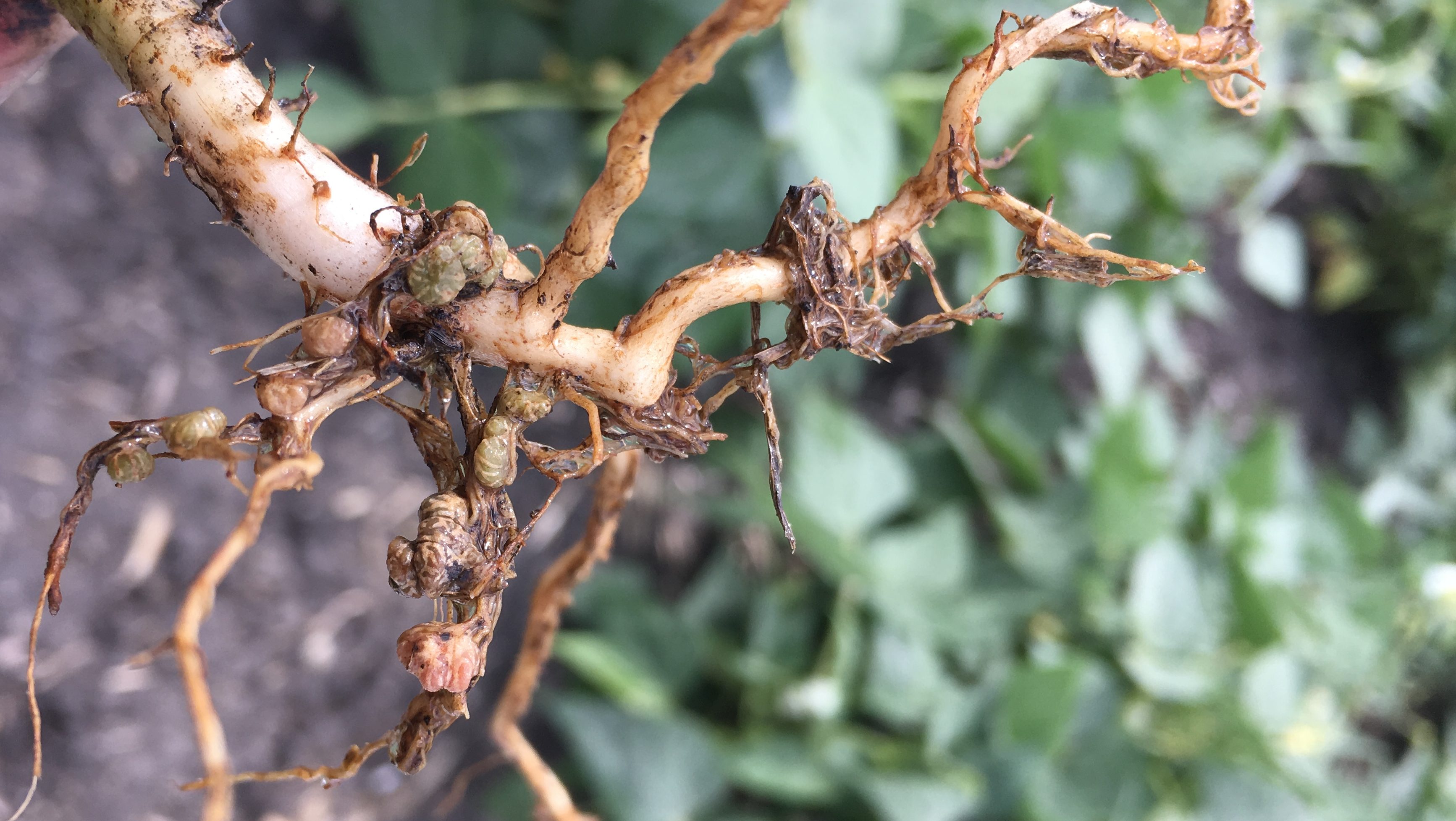
Dig Up Those (Dry Bean) Roots!
-
Article
Issue
Research report
Recipe
News
Event
Page
Production Resource
Field Pea Inoculation and Fertilization
Is inoculation necessary for peas? Field peas can fix atmospheric nitrogen (N2) through a symbiotic relationship with Rhizobium leguminosarum. This bacteria is native to prairie soils, yet farmers typically inoculate peas. In field studies conducted Alberta, peas responded to inoculant 45% of the timeon land with no history of peas.1 Yields of inoculated peas in…
-
Article
Issue
Research report
Recipe
News
Event
Page
Production Resource
Assessing Soybean Nodulation
Timing Assess soybean root nodules each year, regardless of the field history or inoculant strategy. The ideal time to assess nodulation is at the R1 (beginning bloom) stage. Root nodule assessment at this stage gives a clear picture of whether or not a crop has sufficient ability to produce its own nitrogen (N) via biological…
-
Article
Issue
Research report
Recipe
News
Event
Page
Production Resource
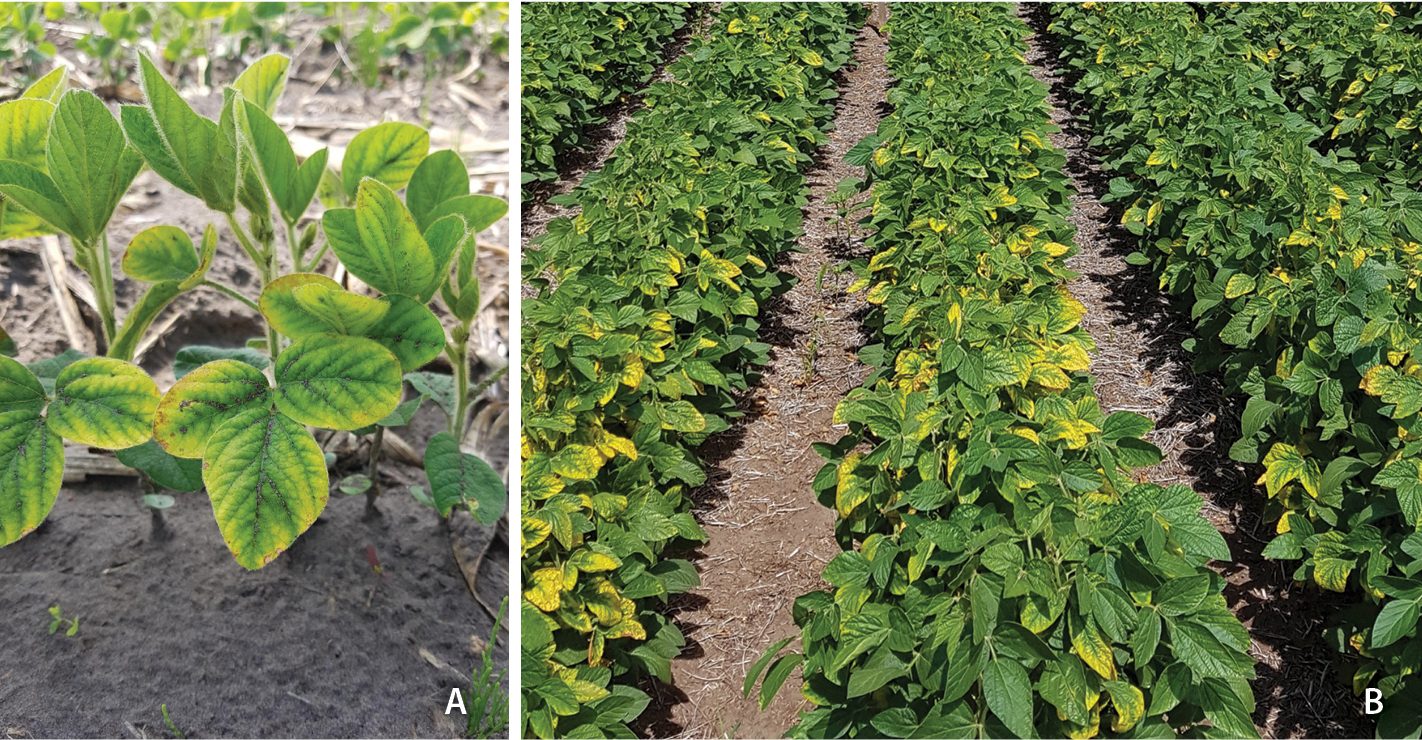
Iron Deficiency Chlorosis
Identification Iron deficiency chlorosis (IDC) is most commonly observed in soybean crops, but dry beans, faba beans and field peas can also be sensitive to IDC. Symptoms of IDC include interveinal yellowing (chlorosis) of new growth, where leaf veins remain green (Figure 1). In extreme cases, interveinal browning (necrosis) can occur. Symptoms show up in…
-
Article
Issue
Research report
Recipe
News
Event
Page
Production Resource
Rescue Nitrogen Fertilizer for Poorly-Nodulated Soybeans
Nodulation failure and nitrogen (N) deficiency has appeared in soybeans across Manitoba, particularly on fields without a history of soybean, in high residue production systems and on acidic soils (pH <6.0). A possible explanation for poorer than usual nodulation and/or nitrogen fixation could be the dry seeding and growing conditions encountered this spring and early…
-
-
-
-
Article
Issue
Research report
Recipe
News
Event
Page
Production Resource
Preliminary Results of Potassium Management of Soybean Production in Manitoba
Filter by term