
Threats and opportunities driving pulse variety development in 2026, and beyond
BY: Matt McIntosh, Writer and Farmer
Having access to pulse and soybean varieties with consistently high yield, quality and resiliency is important to farmers in Manitoba.
Though breeding priorities and investment sources differ for the various annual legume crops – pulses benefit primarily from public-sector research, soybeans largely from private-sector investments, and food-grade soybeans from both public and private dollars – prairie crop breeders continue to assess and develop varieties with improved tolerance to some of the top agronomic threats facing Manitoba.
Improving Soybean Iron Uptake
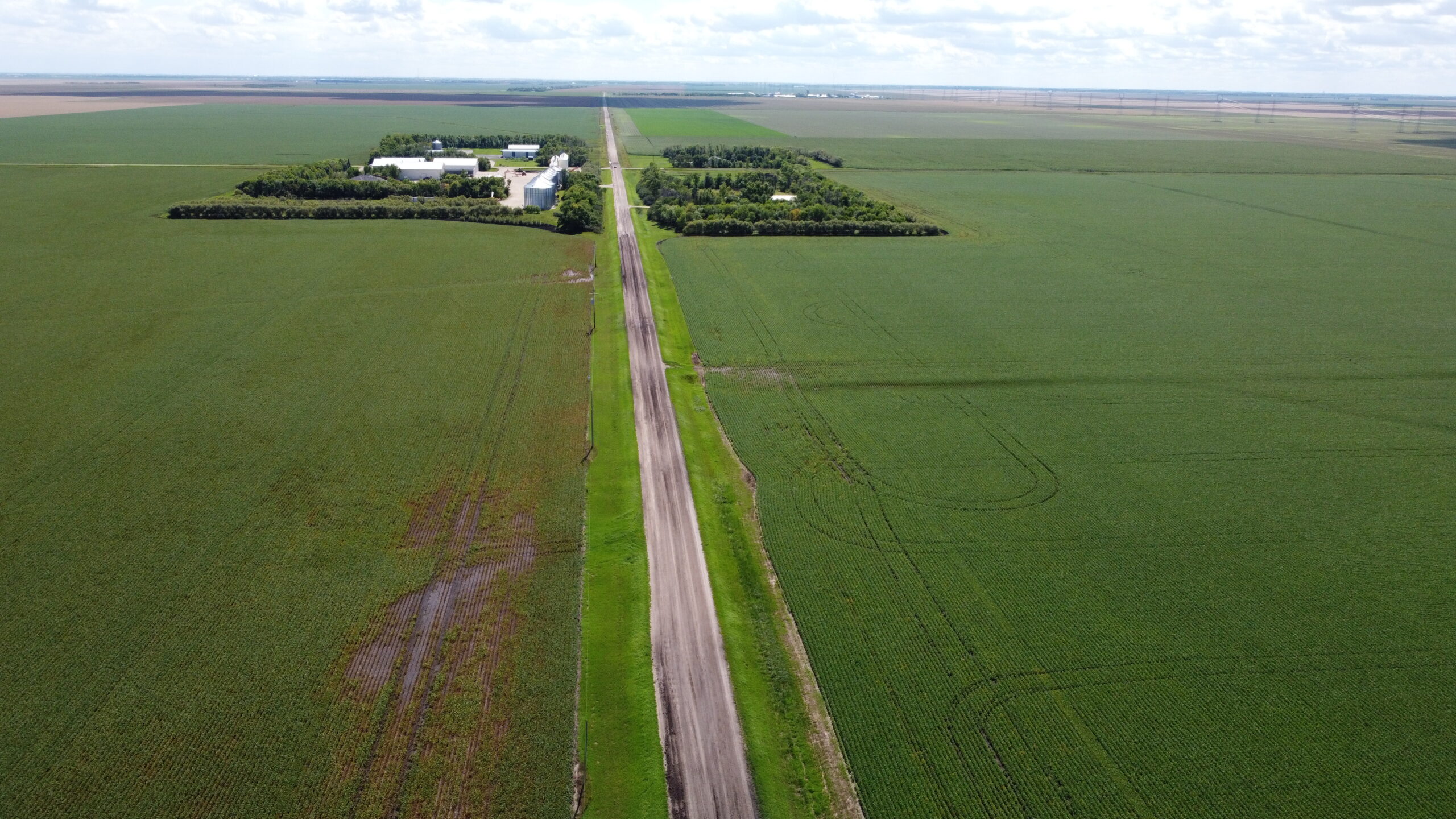
According to Kevin Baron, research scientist at Solum Valley Biosciences, soybeans are particularly susceptible to iron deficiency chlorosis (IDC) – a condition linked to the high pH and carbonate content of many Manitoba soils that limits the plant’s ability to take up and utilize iron. Indeed, he says even relatively small problem areas, such as near road or laneways, can “really whittle away” at soybean yield averages in dry years.
While IDC and salinity can occur in the same fields, they are distinct stresses requiring different management and breeding approaches.
“What was a small problem area of the field in average to wet years can grow as the salts accumulate at the surface with evaporation of water and lack of rainfall to wash salts down into the soil profile,” says Baron. More generally, he estimates IDC ranks “as one of the top three yield robbers” in Red River Valley and Interlake regions.
“There are significant areas of Manitoba where you’d be suffering huge yield reductions from IDC. It’s maybe counterintuitive, but IDC is actually worse early in season for recently emerged seedlings when rains keep the high pH, high lime soil saturated, which creates bicarbonate ions, and in combination with nitrate and salts.”
IDC is often most severe early in the season, when saturated soils create conditions that interfere with iron uptake.
Baron adds the impact of prolonged dry conditions on soybean iron uptake should also not be underestimated when it comes to iron uptake issues.
Historical Focus on Soybean IDC, Salinity Lacking
Taken together, both salinity and IDC continue to be challenges for Manitoba soybean growers because, says Baron, neither factor was historically taken into account when seed companies were importing soybean germplasm from geographies further south.
“Early on with soybeans, it came down to potential yield and maturity. That was the criteria being met. It was only later we realized little or no work has been done on drought or salinity. Soybeans have become a real indicator for revealing salinity issues,” he says.
“We’re also dealing with a compressed growing window. What are the traits you need to utilize that moisture when it’s available, and convert nutrients into yield?”

Moving forward, Baron says there is soybean germplasm from the United States that has proven to have improved salt tolerance. Work is being done to see if the germplasm could be effective in Manitoba, while the search for indigenous germplasm with similar capability is ongoing. Ideally, breeders would be able to stack tolerances for both iron deficiency and soil salinity.
“We’re working with soybean material that has proven itself for stress tolerance in other geographies, and being able to mesh that with early maturing material that works in my backyard and the growers I’m working with,” Baron says. He also suspects there is soybean germplasm already available in Manitoba that could check multiple boxes – it just needs to be identified.
Dennis Lange, pulse and soybean specialist with Manitoba Agriculture, concurs salt tolerance in soybeans is a priority breeding area. Progress has been made, however, with many soybean varieties available to Manitoba growers now being tolerant or semi-tolerant.
Pushing Protein Levels
Progress has also been made in soybean protein levels, Lange says, particularly for food-grade soybeans. Such progress is partially a result of what he calls the “closed-loop” breeding environment, where end purchasers work directly with breeders to shape the product they want.
The same protein progress has not occurred in some pulses, namely, field peas.
Around six years ago, Lange says researchers noticed that protein levels in field peas were declining. Since then, a push has been made to implement minimum protein requirements for new pea varieties.
“Peas have been a big draw for companies like Roquette coming to Manitoba. They require certain parameters for pea quality, and pay a lot of attention to protein,” says Lange
Though some success has been achieved in improving pulse protein levels, Baron says the balance between yield and protein remains challenging for both peas and soybeans.
“Photosynthesis and nitrogen uptake is a very sensitive biological process. For protein production, if that soybean or pea plant is totally reliant on nitrogen fixation, that can be a weak link to getting nitrogen into above ground biomass and converted to protein in the seed,” says Baron. For soybeans specifically, he says negative yield impacts mean protein levels can only be pushed so high.
“For a lot of regions when you’re pushing soybean protein, you can achieve high protein levels, but there’s a point where there’s a yield cost to it. The general range for Manitoba is around 38 to 38.5 per cent protein. We need to get to 41 or 42 per cent. But when we get up to 45 to 46 per cent protein, we get there without an associated yield hit. It’s a balance.”
Weeds and Pathogens
Effective weed control – something Lange says is one of the biggest factors in ensuring good yields – is a constant challenge in soybeans and pulses. For some soybean varieties, the incorporation of herbicide technologies such as dicamba and Enlist resistance have proven effective in recent years, though the length of time required for the crop to close the canopy remains a hurdle for prolonged in-season weed control.
When it comes to peas, improving resistance to Aphanomyces root rot is another important focus.
“Aphanomyces root rot is an ongoing challenge. Recent years have seen success in maintaining 50-plus bushel per acre average pea yield,” says Lange, adding the five- and 10-year averages are 51 and 49 bushels per acre, respectively.
“That’s from focusing on field selection, favorable weather and good weed control. We need to do that because we don’t have a lot of tools in the toolbox for Aphanomyces root rot in peas, aside from crop rotation. Rotation helps but its effect is limited,” says Lange. Looking ahead, he says Phytophthora root rot will be another area of focus for soybean breeders.

Tom Warkentin, professor and researcher with the University of Saskatchewan’s Crop Development Centre, agrees Aphanomyces root rot in peas has been a challenge across western Canada for two decades or more, though generally kept in check with crop rotation. The possibility of a wet year or a series of wet years, however, continue threatening to exacerbate the disease. Breeding for Aphanomyces resistance, too, is a complicated process involving multiple different genes.
“Resistance as it exists in peas isn’t absolute. It’s partial resistance,” Warkentin says. “It’s a challenge for breeders to pyramid for resistance while also selecting for high yields, high protein, and other key things for western Canada … Good plant breeding aims to address the whole package. I don’t and would not want to release a pea variety that’s root rot resistant, but that’s also low yielding or with low protein.”
New and Proven Technologies
New crop assessment technologies are also supporting prairie pulse breeders. Baron says the use of molecular markers will continue to help guide trait selection in soybeans, particularly in cases where in-field selections or phenotyping efforts are hampered by poor growing conditions. While trait selection methods like gene editing could prove useful, too, the regulatory landscape associated with plants with novel traits creates an additional challenge, given the global nature of these crops.
“In contrast, applying editing techniques to pulses like field pea, or leafy greens like spinach or kale, may be more streamlined,” Baron says. Drones and satellite imagery can also be useful in soybean and pulse trait selection, such as when measuring canopy wilt or leaf flipping during hot, dry conditions.
While not a new technology in itself, Warkentin says the cumulation of decades of plant breeding and plant pathology research, along with genome analysis and gene marker-assisted selection, is bearing fruit for breeders working with peas. Indeed, his lab alone has released three different yellow pea varieties – CDC Boundless, CDC Engage, and CDC Canuck – in the last two years, all featuring high yields, moderate to high protein levels, and good lodging resistance. CDC Cedar, a non-GM soybean variety with good yields, good protein levels, and extra early maturity was also released.
“I’m excited about those four crop varieties, and there will be more coming of course. I expect future pea varieties will also have improved resistance to the root rot complex,” says Warkentin. He expects Boundless will be available to growers in 2026, Canuck and engage in 2027, and Cedar in either 2027 or 2028.
Genetics as the Foundation
New tools and tried-and-true techniques aside, Lange reiterates improved genetics are the backstop of future success for western Canadian soybeans and pulses.
“You have to start with good genetics. That’s the best starting point by far. Having varieties that have some better yield potential and disease resistance is one way of making sure you’ll have long term viability of the industry,” says Lange.