
Research highlights for lupins, food grade soybeans, faba, adzuki, and dry beans.
BY: Matt McIntosh
Research into alternative pulse crops is ongoing to expand the range of cropping options available to Manitoba growers.
At a time of significant economic and political uncertainty, researchers say better genetics and agronomic knowledge for crops such as dry beans, adzuki beans, and faba beans, as well as lupins and food grade soybeans, will help farmers seize changing market opportunities, while insulating from market shocks in well established commodities.
Bringing Adzuki Beans North
Adzuki beans are a popular food item and ingredient in Asian markets. Over the last decade, bean growers in Ontario have responded by growing the crop on more acres – up to 18,000 acres as of 2022. Pete Giesbrecht, owner of Manitoba pea breeding company Pulse Genetics, says yield and profitability for adzuki beans in Ontario has been good and could be a great option in Manitoba. The province’s higher latitude, however, has thus far proven to be a barrier to the crop’s northward spread.

“In Manitoba there have been growers who have tried growing adzuki beans but have not continued…We have to breed for adaptation and maintain seed quality through large seed size and dark red colour,” says Giesbrecht, highlighting two main qualities adzuki purchasers commonly seek.
“But at the same time, we have to breed for something that’s adapted, that’s more determinant and vigorous for a colder climate and shorter growing season. I think there’s a lot of varieties out there that show a lot of potential. We just have to do some breeding work on them. That’s something that has not been done historically.”
Like other dry beans, Giesbrecht says, adzuki management can be challenging and “will have to be learned.” It’s far from an insurmountable problem, though. Disease issues, for example, aren’t particularly significant compared to adzuki’s more common dry bean cousins, and resistance to problem diseases has been identified in some varieties. Weed management may pose a more significant challenge in the immediate term, given the crop’s lack of early season vigour and the comparatively small number of herbicides registered for use with adzuki beans. The crop “has higher sensitivity” to specific post-emergent herbicides as well, making herbicide-induced crop damage a greater concern.
“We’ve done line screening for adaptability and desirable traits, and are just starting some breeding work and line crossing,” Giesbrecht explains. “It’s very early stage breeding work.”
Lupin Potential
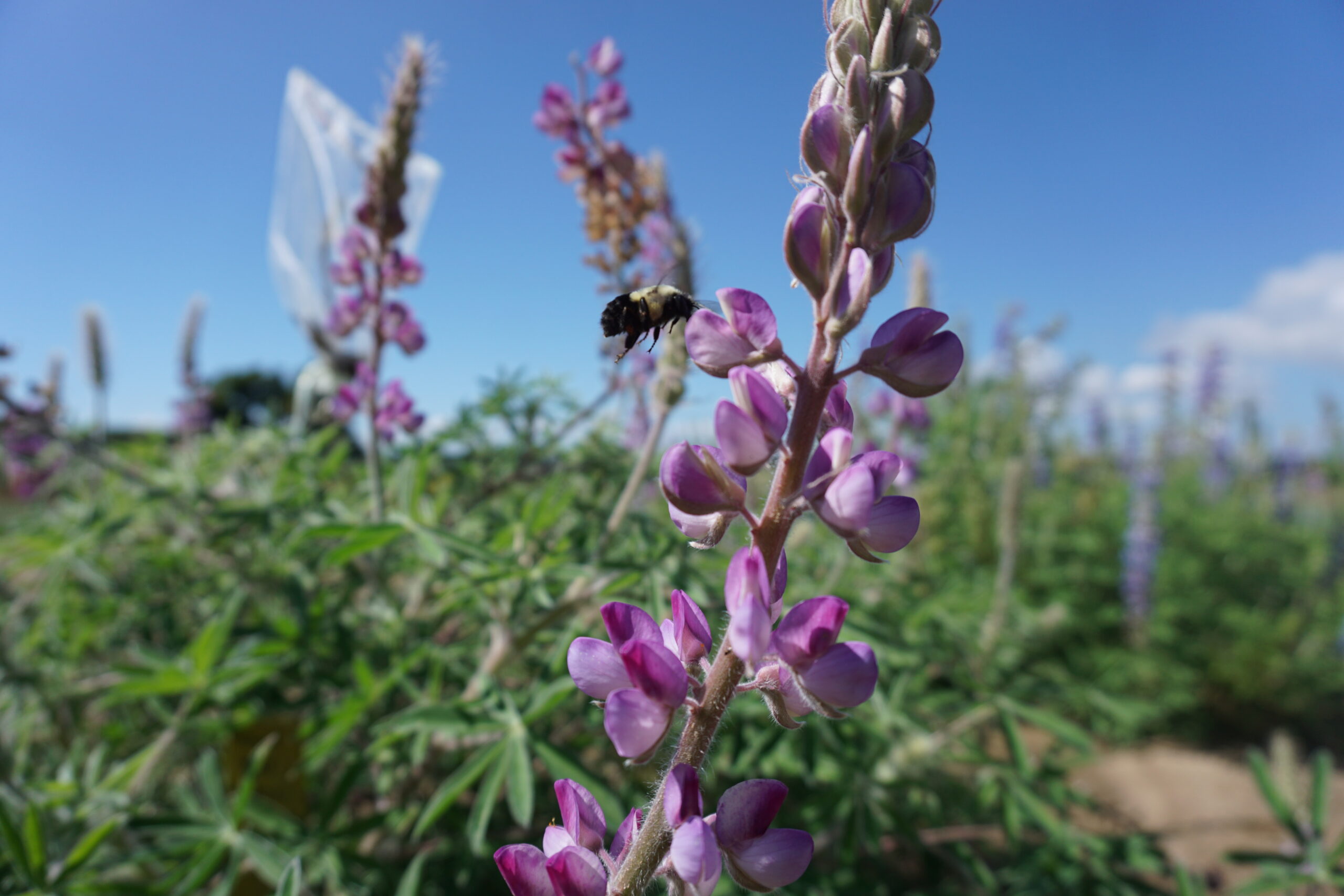
Lupins – a flowering pulse that can grow in relatively poor soils – are another crop in the early stages of research for prairie suitability.
At Agriculture and Agri-Food Canada’s (AAFC) Harrow Research and Development Centre in Ontario, seed biologist researcher Eric Fedosejevs is engaged in the development of novel lupins, in an effort to provide farmers with a crop option combining high protein levels, fertilizer savings and other benefits.
“They’re good nitrogen fixers, even for legumes. They’re also specialized for phosphate uptake. A number of species develop these specialized roots called cluster roots that excrete organic acids into the soil to mobilize both organic and inorganic phosphate supplies, which would otherwise be unavailable,” says Fedosejevs. Such characteristics mean lupin growers could reduce fertilizer inputs, achieving cost savings.
The problem – the lupin varieties cultivated in places like Europe and Australia have origins in the Mediterranean basin, and are very susceptible to disease in moist conditions. Indeed, both soil moisture and humidity pose significant production risk. Susceptibility to soybean cyst nematode is also common. In Western Canada, trials of varieties proven in other parts of the world have thus far brought very mixed results.

There are, however, some 200 New World species native to the Americas. Fedosejevs explains some do much better in wet environments, while others thrive in very harsh desert conditions. The species themselves are closely related too, which potentially translates to a significant genetic pool from which new varieties can be created for prairie growing conditions, and beyond.
“We are tentatively optimistic many of these species can be crossed,” adds Fedosejevs. “We have a wide pool of traits and life strategies across all these different environments that all could be potentially harvested as a source of germplasm for future crop improvement. It’s incredible, the potential genetic and phenotypic diversity compared to a lot of existing crop species, like soybean for example.”
Broader Dry Bean Research
AAFC’s Harrow Research and Development Centre is also home to a wide range of dry bean research initiatives headed by dry bean breeder Jamie Larsen. His program focuses on disease screening and the development of germplasm with disease resistance suitable for growers in Manitoba, as well as Ontario. One research stream – improved resistance to bacterial blight – has highlighted a trade-off between disease resistance and crop maturity.
“Since we’ve been working on bacterial blight resistance in kidney and cranberry beans, one of the challenges is we have an expectation of what the maturity should be for those varieties. It’s a lot earlier than navy beans are, typically, but as soon as you incorporate some of this bacterial blight resistance, what happens is those lines become longer season. So, we’re kind of battling this maturity-resistance interaction,” says Larsen. “We are making some progress, but it’s been more challenging than I thought it would be.”

Other research areas include anthracnose resistance – something Larsen says is particularly relevant to Manitoba growers confronting Races 105 and 109 of the disease – and testing specific dry beans, such as pintos, for suitability in Manitoba.
“Pintos are not really a crop in Ontario. But since we’ve been asked to do more of the dry bean breeding for Manitoba, we put a pretty large effort in. We’re working on all the relevant traits important to growers in Manitoba,” explains Larsen, citing the enhancement of slow darkening, regular, and non-darkening pinto varieties for different agronomic and end-use needs as an example.
“We’re sending a lot of our more advanced, better dry bean lines to Manitoba for yield testing. We’re working on scaling some of this up.”
Manitoba’s Diversification Centres
Back in Manitoba, pulse research is brought together through Manitoba Diversification Centres – four research centres spread across the province, where local producers and industry direct applied research on crops, technology and best management practices. Craig Linde, director of science, innovation and extension with Manitoba Agriculture, says the location of each centre allows researchers to test and troubleshoot pulse crops across a diverse range of Manitoba environments and soil types.
“For some of these pulses, we’re in early stages, just learning more about them and if they might have potential in Manitoba. We’re looking at basic things like yield potential, diseases, how they behave in different conditions,” says Linde. Adding “time and water” are the two most significant management challenges facing Western Canadian growers more generally.

“You’re not going to learn how to grow something by thinking its going to be perfect right off the bat. Some of these smaller crop markets can be quite volatile. We need experience to take advantage of those markets when the price is right. There’s also the longer-term advantage, in terms of learning how to grow it on your farm, which can be advantageous if the markets do expand and grow. You’re already up to speed and lower that risk and take full advantage of those opportunities.”
Linde also highlights the benefits of adding new pulses to existing crop rotations, including both the disruption of pest and disease cycles, and the relatively low pest and disease pressure facing crops that have only been established in an area for a short time.
“You definitely need to do your homework so you have a home for it after harvest,” Linde says, reiterating accessing specialty markets can bring transportation and storage complications. “If a new pulse seems to fit into your other major revenue crops, that would be the best-case scenario.”
Improving Markets
Agronomy aside, broader efforts to improve the viability of pulse crops though market development also continue.
A 2024 investment from Protein Industries Canada, Prairie Fava, DL Seeds and Three Farmers, for example, is expanding the snack food market for Canadian faba beans. Such investments build on historical improvements to faba bean marketability, including the removal of what Manitoba farmer and faba bean agronomist Jeff Kostuik calls “antinutritionals” – specifically, tannins that negatively affect flavour and compounds associated with digestive intolerances. More recently, he says, breeding has revolved around reducing the size of faba beans, and making them more spherical for improved handling in the field and at processing.

“When I started growing faba beans, they were the size of your thumb. Now they’re starting to look more like a soybean or a pea,” Kostuik says. “Agronomically, it’s the highest nitrogen-producing annual legume that we have.”
Another investment led by NRGene Canada, Pulse Genetics, Hensall Co-op, and Yumasoy Foods – also with support by Protein Industries Canada – aims to expand Canada’s share of the global market for Identity Preserved soybeans by improving varieties for both traditional and non-traditional production areas.